| The Fireplace
Many homes in the world and US are equipped with a heating structure the Fireplace
furniture.
Usually located in the living room family
room or master bedroom, structurally integrated into the home structure
made of basic materials like brick, metal stucco wood and stone.
An opening made in the base of a chimney to hold an open fire. The opening
is framed, usually ornamentally, by a mantel or a mantelpiece. A medieval development
that replaced the open central hearth for heating and cooking, the fireplace
was sometimes large enough to accommodate a sitting space called an inglenook.
Early fireplaces were made of stone; later, brick came into use. In 1624 Louis
Savot developed a fireplace in which air was drawn through passages under the
hearth and discharged into the room through a grill, a design adapted in the
20th century.
Back then the average fireplace was used in both heating and cooking however,
today it is mostly used for heating, creating a specific ambiance and as a decorative
element such as the ventless fireplace..
Another location you may find a fireplace is the workplace such as an office
or meeting room. Although it is considered an item of luxury it is still very
common.
Various forms of fireplaces have existed in every culture for at least 1 million
years. Ancient fire pits were built into the ground in the center of a hut or
dwelling. The smoke escaped through holes in the roof.
Thousands of years later, with the development of two story buildings, the
fireplace was moved to outside of the structure. At this time, fireplaces were
still vented horizontally and often smoke would be blown outside or even back
into the room. The chimney presented a fix for this problem and vented the smoke
outside of the dwelling. In 1678 Prince Ruppert, the nephew of Charles I, raised
the grate of the fireplace which improved the airflow and venting system.
The 1700s saw two important developments in the history of fireplaces. Ben
Franklin developed a convection chamber for the fireplace that greatly improved
the efficiency of fireplaces and wood stoves. In the later 1700s, Count Rumford
designed a fireplace with a tall, shallow firebox that was much better at drawing
the smoke up and out of the building. Rumford's design is the foundation for
modern fireplaces.
In many places, coal, wood or peat burning fires are being replaced by safer
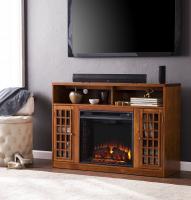
natural gas fueled fireplaces, electric
fireplace and gel
fireplace which are a environmentally cleaner and efficient form of energy.
In recent years some companies such as Southern
Enterprises SEI
introduces the gel
fueled fireplace and electric
fireplace both portable and ventles fireplace and sold at a very affordable
prices. Structurally very safe and made in many different styles and finishes,
these fireplaces are a big hit with furniture shoppers at Totally Furniture
which may not wish to invest thousands of dollars to build a fireplace, will
turn to a portable fireplace ventless
fireplace which will be theirs to take to any location that they might eventually
move to.
At our evolving age of electronics now days televisions come slimmer and lighter
then their monstrous ancestors. Thus making the portable fireplace the new plasma
TV stand and it is doing a great job at being an LCD stand.
Now days any popular magazine related to home furniture or home improvement
will make sure to add a plasma TV or an LCD screen TV to feature above the fireplace,
truly a magnificent home
decor feature.
Author: EBA
All rights reserved
|